
How to Factory Reset a Samsung Phone and What Stays Locked
Settings, General management, Reset, Factory data reset. It erases your data but not the Google or Samsung account lock, so you still need those sign-ins.
A hard reset and a factory reset are one thing on Samsung’s support pages: the phone goes back to the state it left the factory in, and everything of yours on it is erased. Save what you want to keep before you tap anything. How to do that follows the first set of steps.
Know one thing before you start. A reset erases your data. It does not remove the account locks. A phone that is reset with its buttons asks afterwards for the Google account that was on it, and the reset in Settings asks for the password of the Samsung account signed in on the phone before it will finish. This guide has no step for getting past either lock. For an owner who is stuck, Samsung’s answer is its service centres.
Factory reset from Settings
These are the steps on Samsung’s US page, Perform a factory reset on your Galaxy phone or tablet, and its pages for India and Africa give the same route. The phone needs an internet connection, because it signs out of your Samsung account as part of the reset.
- Open Settings and tap General management.
- Tap Reset, then Factory data reset, and read what the screen lists.
- Scroll to Reset and tap it.
- Tap Delete all.
- Enter your PIN, pattern or password if the phone has a screen lock.
- Enter your Samsung account password if a Samsung account is signed in. Samsung says the reset cannot be completed without it.
The phone restarts at the first setup screen, as it was out of the box. Samsung’s UK page says a tablet follows the same steps.
Older phones keep the option elsewhere. For software older than Android 7, Samsung’s UK page gives Settings, Backup and reset, Factory data reset, or Settings, Privacy, Factory data reset.
Save your data before you reset
Samsung’s UK page lists what a factory reset deletes for good: personal data, customised settings, apps from the Play Store, messages, contacts and photos. The apps can be downloaded again once you sign back in to Google. The rest is gone unless you saved it. Samsung’s US page sets out these ways to do that.
For Samsung Cloud, open Settings, tap your Samsung account name at the top, then Samsung Cloud, Back up data, and Back up now. Samsung describes it as covering things such as call logs, messages and settings, and says it is not offered on every network or in every country.
For Google, open Settings, tap Accounts and backup, then Back up data under Google Drive, and Back up now.
Smart Switch, Samsung’s own app, copies the phone to a Windows PC or a Mac over a USB cable, or to a microSD card or USB drive plugged into the phone. Samsung lists photos among the things a Smart Switch backup restores, so use this one if your pictures are not already in a cloud account. Samsung’s Indian page recommends it before a reset.
If the microSD card is encrypted, Samsung says to decrypt it before the reset, or the phone will not be able to read it afterwards: search Settings for Decrypt SD card. And make sure you know the passwords for the Google account and the Samsung account on the phone. You are about to need them.
Factory reset with the buttons
Samsung’s UK page, How do I perform a factory reset on my mobile device?, gives a second way, through the recovery menu, for when you cannot reach Settings. It mentions being locked out, and Samsung’s South African page mentions a frozen screen or a phone that will not start. Read the next section before you use it, because this is the reset that brings up the Google lock.
- Switch the phone off. A locked phone asks for its PIN, pattern or password before it powers down.
- Plug the phone into a computer with a USB cable.
- Hold Volume up and the Side button together until the phone vibrates and the Samsung logo appears, then let go. That is the combination Samsung gives for phones with no Home key and no separate Power button, which describes current Galaxy phones. Its examples are the Note 10, Note 20, S20, S21, Fold and Z Flip.
- In the menu, press the volume buttons to move to Wipe data/factory reset, which some phones label Delete all user data. Press the Side button, which Samsung calls Power here, to select it.
- Move to Factory data reset, which some phones label Yes, and press the Side button.
- When the screen shows Data wipe complete, press the Side button on Reboot system now.
Older phones use other buttons to open the menu. On the Galaxy S8, S9 and S10, which have a Bixby button, Samsung gives Volume up, Bixby and Power. On phones with a physical Home key, such as the S6 and S7, it is Volume up, Home and Power.
The restart can take a few minutes. The phone then runs through setup as if new, and Samsung’s last step is that you may be asked for your Google password.
What a reset does not remove
Google’s Factory Reset Protection is the first thing. Samsung’s US pages describe it as a security feature for a phone that is lost or stolen, present on Android 5.1 and later. It switches itself on when you add a Google account and set a screen lock, and it is triggered when the phone is reset by any method other than Factory data reset in Settings. The phone then requires the username and password of the last Google account that was on it. With the wrong details, Samsung says, the device will not unlock. On Android 9 and later the phone may accept the screen lock you used before the reset as proof.
The Samsung account is the second. The Settings route asks for the Samsung account password before it completes. Samsung’s US trade-in terms go further. They name Reactivation Lock beside Google’s Factory Reset Protection as anti-theft locks that must be switched off, and the trade-in FAQ tells owners to log out of their Samsung and Google accounts before resetting, because Samsung does not accept a phone with a lock left on.
So a reset is not a way round a forgotten account, and it does not make a phone usable by someone who is not its owner. Both locks exist for that purpose. The data goes, and the phone still knows whose it was.
Before you sell it or give it away
Take your accounts off first, then reset from Settings. Samsung’s UK page gives the steps for the Google account:
- Open Settings and tap Accounts and backup.
- Tap Manage accounts.
- Tap your Google account, then Remove account, and confirm.
Sign out of your Samsung account as well, which Samsung’s trade-in instructions ask for, then run the factory reset from Settings. If you are buying a used Galaxy, ask the seller to do all of this while you watch. A phone that comes up asking for somebody else’s account is that person’s to unlock.
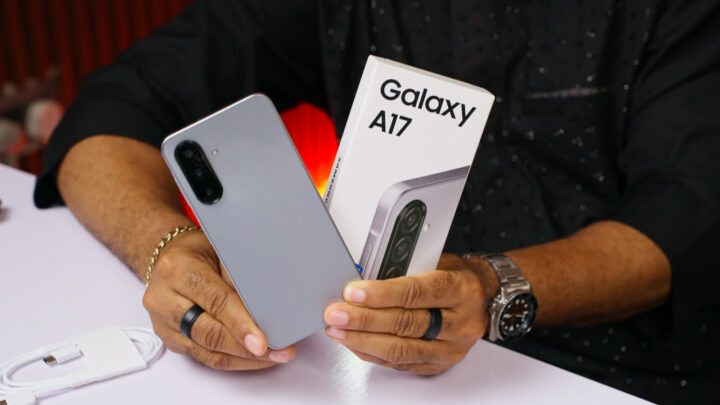
If the reset is because a new phone is on the way, our comparison of this year’s Galaxy A series says which two of the five are worth buying.
If you are locked out of your own phone
Erasing a phone does not get you into it. After a reset with the buttons the phone requires the Google account that was on it, and Samsung says it will not unlock with the wrong details. Without that account, the route is a Samsung service centre with proof of purchase.
Go to Samsung. Its help for a forgotten screen lock is on its own pages: Unable to unlock Galaxy phone or tablet’s screen on the US site, “I can’t unlock my Samsung Galaxy device” on the UK site, and a page on the Indian site about unlocking with a previous PIN. Every route they offer rests on proving the phone is yours, with an earlier screen lock, your Samsung account or your Google account.
If the phone has been reset and wants a Google account:
- You know the email but not the password. Samsung says to set a new password through Google’s website. Google may make you wait 24 hours, sometimes longer, before the new password unlocks the phone.
- You have several Google accounts and do not know which it was. Samsung suggests checking each one in Google’s device manager to see which account lists the phone.
- You cannot remember any of it. Samsung’s instruction is to take or send the phone, with proof of purchase, to an authorised Samsung service centre. That is the reason to keep the receipt for any phone you buy.
Samsung lists its authorised centres by country, and the page for Africa is Find a Samsung Support Centre.
Resets that keep your data
People use “reset” for five different things. Samsung’s pages separate them like this, and only the last one erases the phone.
| What Samsung calls it | How | What you lose |
|---|---|---|
| Restart | Hold Side and Volume down until the power options appear, then tap Restart twice | Nothing |
| Soft reset, or force restart | Keep holding Side and Volume down until the screen goes black and the Samsung logo appears | Nothing. It is the fix for a frozen phone |
| Reset all settings | Settings, General management, Reset, Reset all settings | Your settings. Apps, files, accounts, and security and language settings stay |
| Reset mobile network settings, or Wi-Fi and Bluetooth settings | The same Reset menu | Saved networks and pairings |
| Factory data reset, also called a hard reset or master reset | Settings, or the recovery menu with the buttons | Everything on the phone |
Samsung’s UK page defines a soft reset as turning the device off and on again, which closes open apps and leaves stored data alone. For a frozen phone it says to hold Power and Volume down together for more than seven seconds.
Try the smaller resets first. Samsung’s Indian page calls a factory reset a last resort, and its UK page suggests starting the phone in safe mode before you erase it, to see whether an app you installed is the cause. Reset all settings is what Samsung suggests when screenshots stop working, and the network reset is one of its steps when Wi-Fi Calling will not connect.
Is there a Samsung factory reset code?
We found no dial code on Samsung’s support pages. They give the Settings menu, the recovery menu and, for a phone you cannot reach, erasing it remotely through SmartThings Find with your Samsung account.