
Phones With In-Display Fingerprint Readers, by Price
The cheapest phone with an in-screen reader on US stores costs about $490, and ultrasonic sensors start near $800. The full list, by price.
A fingerprint reader under the screen is ordinary now. On Samsung’s, Google’s, Motorola’s and Nothing’s US stores, the only phones without one are the cheapest models and the folding ones. iPhones do not have one at all.
So the choice is which kind of sensor you get and how little you can pay for it. We would buy the Pixel 10a at about $600, for its seven years of updates. To spend as little as possible, take the Moto G Stylus 2026 or the Nothing Phone (4a) Pro, both about $500 with 8GB of memory. The Pixel 10 at about $800 is the cheapest way to an ultrasonic reader.
Some links on this page go to Amazon. As an Amazon Associate I earn from qualifying purchases.
In-display fingerprint mobile list
Prices are the makers’ own US store prices for the cheapest version, rounded, from lowest to highest.
| Phone | Maker’s price | Sensor |
|---|---|---|
| Samsung Galaxy A37 5G | about $490 | Optical |
| Nothing Phone (4a) Pro | about $500 | Optical |
| Moto G Stylus 2026 | about $500 | Optical |
| Google Pixel 10a | about $600 | Optical |
| Samsung Galaxy A57 5G | about $600 | Optical |
| Motorola Edge 2026 | about $600 | Optical |
| Samsung Galaxy S26 FE | about $700 | Optical |
| Nothing Phone (3) | about $700 | Optical |
| Google Pixel 10 | about $800 | Ultrasonic |
| Google Pixel 11 | about $900 | Ultrasonic |
| Samsung Galaxy S26 | about $1,000 | Ultrasonic |
| Google Pixel 11 Pro | about $1,100 | Ultrasonic |
| Samsung Galaxy S26 Ultra | about $1,400 | Ultrasonic |
Motorola prints the sensor type on the Moto G Stylus spec sheet. Samsung, Google and Nothing say only that the reader is in the screen, and Motorola’s Edge sheet says on-screen without naming the type, so for the other phones the optical or ultrasonic label comes from GSMArena’s spec pages.
Phones with the reader somewhere else
iPhones have none under the screen. Apple’s comparison page lists Face ID for the iPhone 17 and iPhone 18 Pro lines, and the folding iPhone Duo has Touch ID, with the sensor in the side button.
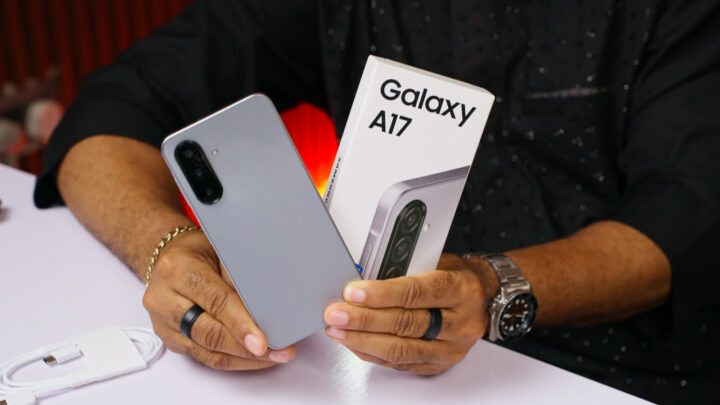
The cheapest Android phones keep it on the side: Samsung’s Galaxy A27 5G at about $380 and A17 5G at about $270, the Moto G Power 2026 at about $400 and the Moto G 2026 at about $300. So do folding phones. Samsung lists the Galaxy Z Fold8 and Z Flip8 with the scanner on the side button, and GSMArena shows the same for Motorola’s Razr phones and Google’s Pixel 11 Pro Fold.
OnePlus is missing from the list on purpose. Its US site carries a notice that the company has stopped launching products in Europe and North America, and the OnePlus 15 and 15R were both out of stock there.
Optical or ultrasonic
An optical reader works with light. Goodix, which makes them, describes a lens-type sensor that sits under an AMOLED screen. That is why phones with LCD screens go without. Motorola’s US range shows it neatly: the Moto G Stylus and the Edge have AMOLED screens and readers in the screen, while the LCD Moto G Power and Moto G keep the reader on the side.
An ultrasonic reader works with sound. Qualcomm sells these under the name 3D Sonic. It says the sensor bounces an ultrasonic pulse off the ridges of your finger to build a 3D image, and that it keeps working when the finger is wet. Qualcomm also says this is harder to fool than an optical reader. That is a company describing its own product, so weigh it accordingly.
The wet-finger point is the one that matters day to day. If you cook, garden, swim or work with your hands, an ultrasonic reader is worth having. For everyone else an optical reader does the same job. The gap between the cheapest optical phone in the table and the cheapest ultrasonic one is about $310, and we would not pay that for the sensor alone.
One warning covers both kinds. Samsung says on its fingerprint support page that fitting a different screen protector can affect recognition. Check that a protector is made for an in-screen reader before you buy it.
Under $500
All three are optical, and they are the cheapest phones with a reader in the screen on their makers’ US stores. On paper the Samsung is the weakest: 6GB of memory where the other two have 8GB, for about the same money. We would take the Motorola for the card slot or the Nothing for the extra memory.
The Samsung Galaxy A37 5G’s $490 version has 128GB of storage and 6GB of memory. This is where Samsung’s in-screen readers start, going by the list on its support page. Samsung Galaxy A37 5G on Amazon
The Nothing Phone (4a) Pro has 8GB of memory and 128GB of storage at the base, and Nothing sells a 12GB and 256GB version for about $600. Nothing Phone (4a) Pro on Amazon
The Moto G Stylus 2026 has 8GB of memory and a stylus, and takes a microSD card of up to 1TB. Moto G Stylus 2026 on Amazon
$500 to $800
The Google Pixel 10a is the pick of this group. The reader is optical and the memory is 8GB, the same as its rivals at about $600, but Google promises seven years of operating system and security updates. Motorola promises two Android upgrades for the Edge 2026 at the same price. Google sells the 10a on the Google Store.
Those rivals are the Samsung Galaxy A57 5G, with 8GB of memory and either 128GB or 256GB of storage, and the Motorola Edge 2026, a 6.3-inch AMOLED phone with 8GB of memory and 128GB of storage. Samsung Galaxy A57 5G on Amazon
At about $700, the Samsung Galaxy S26 FE is the cheapest of the four Galaxy S26 phones and the only one with an optical reader. The Nothing Phone (3) is Nothing’s top phone, marked down from $799 on its own store, with 12GB of memory and 256GB of storage. Nothing Phone (3) on Amazon
The Google Pixel 10, about $800, is last year’s Pixel, still on the Google Store with 12GB of memory, and the cheapest phone we found with an ultrasonic reader. Google Pixel 10 on Amazon
$900 and up
Everything at this level is ultrasonic: the Pixel 11 at about $900, the Galaxy S26 at about $1,000, the Pixel 11 Pro at about $1,100 and the Galaxy S26 Ultra at about $1,400. The Galaxy S26+ sits in between at about $1,200.
At these prices you are paying for the rest of the phone. The fingerprint reader is the same kind as the one in the $800 Pixel 10.
Cheaper routes outside the US
Xiaomi is the one to look at. Its global site lists an in-display optical fingerprint sensor on the Redmi Note 17 in both the 4G and 5G versions, on the Redmi Note 17 Pro 5G and on the POCO X8. The plain Redmi 17 has a side sensor, so the word Note is what to look for.
Xiaomi has no US store, so there is no dollar price to give. The European prices GSMArena lists for the Redmi Note 17 are well below anything in the table above.
Other phones sold outside the US that GSMArena lists with an optical reader under the screen include the Nothing Phone (4a) and Phone (4b), the Motorola Edge 70 Fusion and the Realme 16 Pro+.
Some budget phones with curved screens read fingerprints through the glass as well. Tecno lists an under-display sensor on the Pova Curve 2 5G, and GSMArena lists one on the Infinix Note Edge. Both appear among phones that still have curved screens.
Torn between two phones, do not let the fingerprint sensor settle it. Memory and update support matter more over the life of a phone, and we have a separate guide to how much RAM a phone needs.